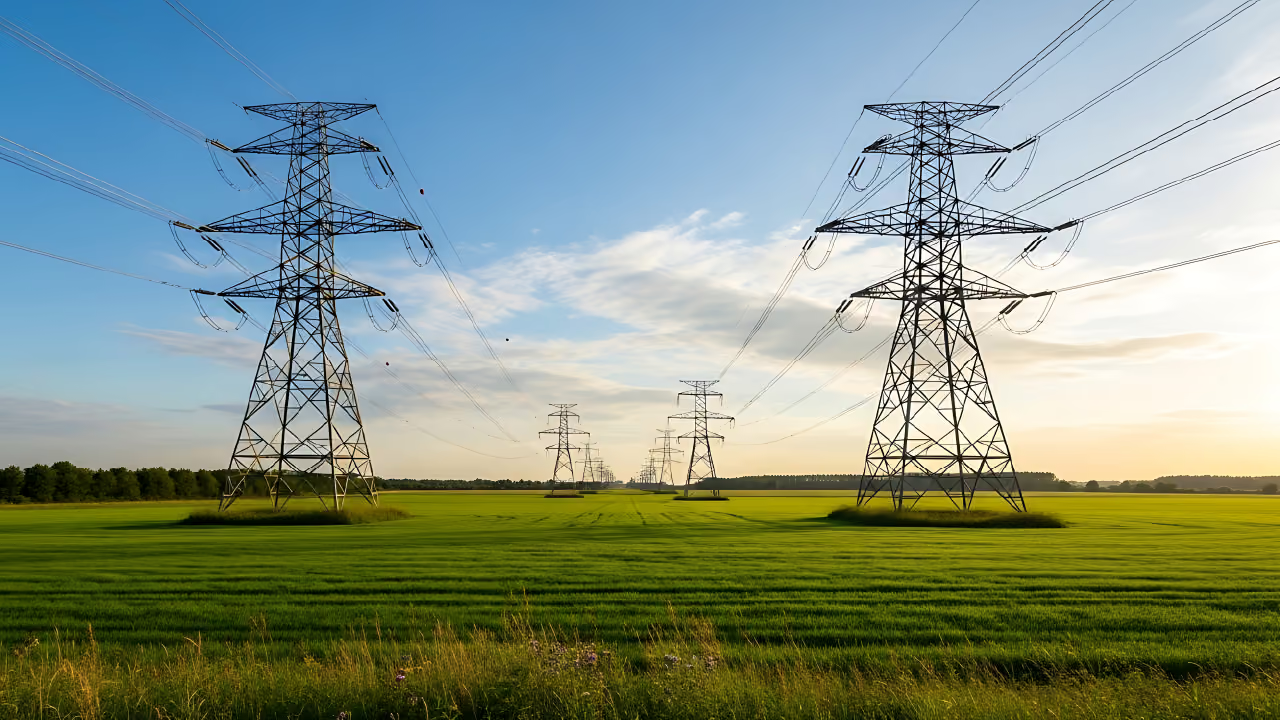
The energy transition also depends on the grid

The energy transition is not just about producing renewable energy. While wind, solar, and hydrogen take center stage in public debate, another reality determines their scalability: the capacity of our grids to connect, transport, distribute, and manage this energy.
Long overshadowed by production methods, electrical grids have now become a strategic priority for industrial players, infrastructure managers, and local regions. With the rise in the number of producers, the electrification of daily life, the development of electric mobility, and the connection of new industrial sites, needs are accelerating everywhere.
At agap2 Énergies & Environnement, we have spent over 20 years supporting the stakeholders who design, modernize, and operate the infrastructure essential to the energy transition. Thanks to our industry experience and our knowledge of the entire electrical market value chain, we work alongside the companies that connect, transport, and manage this green energy.
A grid under pressure, at the heart of new demands
New production requires new distribution. The energy transition is profoundly transforming the architecture of our electrical system. Large, centralized production facilities are now being joined by a multitude of decentralized producers: wind farms, photovoltaic installations, rooftop solar panels, local production units, and hydrogen-related infrastructure.
This evolution significantly increases connection needs and forces grids to adapt to avoid a major risk: the bottleneck. When capacity for intake, transport, or distribution fails to keep pace with new projects, the entire value chain can be slowed down.
At the same time, usage patterns are evolving rapidly. The deployment of electric vehicle charging stations, the rise of electric buses, the growth of data centers, and the electrification of industrial processes are creating unprecedented demand. Existing infrastructure, particularly high-voltage systems, must therefore be resized, reinforced, and managed with greater precision.
We are seeing a surge in programs related to electricity transmission and distribution infrastructure. These projects address three main priorities: building new capacity, modernizing the existing grid, and intervening as close as possible to end-use applications.
With the rise of charging stations and hydrogen hubs, medium-voltage (MV) grids are facing increasing technical constraints. Connection lead times are lengthening, becoming a key issue for both industrial players and grid operators. In its December 2025 report on smart grid indicators, the French Energy Regulatory Commission (CRE) already highlighted that these delays were one of the main obstacles to integrating new electrical uses.
The goal is clear: support growing needs while maintaining competitive lead times, high service quality, and the operational continuity that industrial players depend on.
Real-world industrial challenges
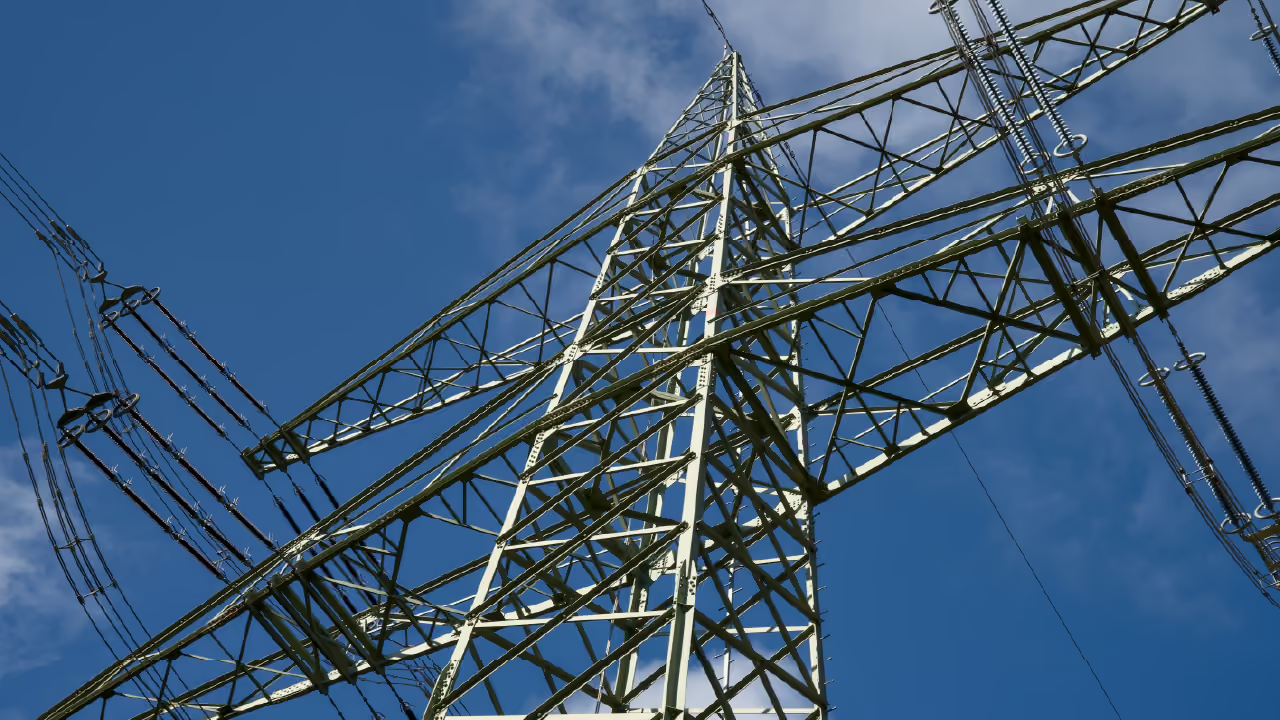
Recent industry developments confirm that electrical infrastructure has become a strategic priority. Building new capacity mobilizes the entire sector, from grid operators and equipment manufacturers to engineering firms, construction companies, and project management specialists.
Needs related to offshore wind, for example, are generating strong demand for cables, substations, and connection solutions. Industrial players like Nexans have recently highlighted the importance of these opportunities in their order books, driven by the boom in offshore projects.
Grid modernization is another major focus. Enedis has announced a €2.7 billion investment with French and European equipment manufacturers to secure its supply chain and support the modernization and resilience of the public electricity distribution network in the context of the ecological transition.
Beyond equipment, the pressure is also felt in terms of human resources and available expertise. The electrification of industrial processes is leading to a significant increase in connection requests. To meet this demand, industry players must quickly mobilize skills in studies, planning, coordination, construction monitoring, risk management, and commissioning.
Delivering a grid connection has thus become an economic challenge in its own right. Grid operators must balance, prioritize, and adapt their intervention models to meet growing demand within tight deadlines and on increasingly complex projects.
Our role at the heart of the grid
For over twenty years, we have been supporting industry players in the creation, renewal, and modernization of electrical grids across all voltage levels.
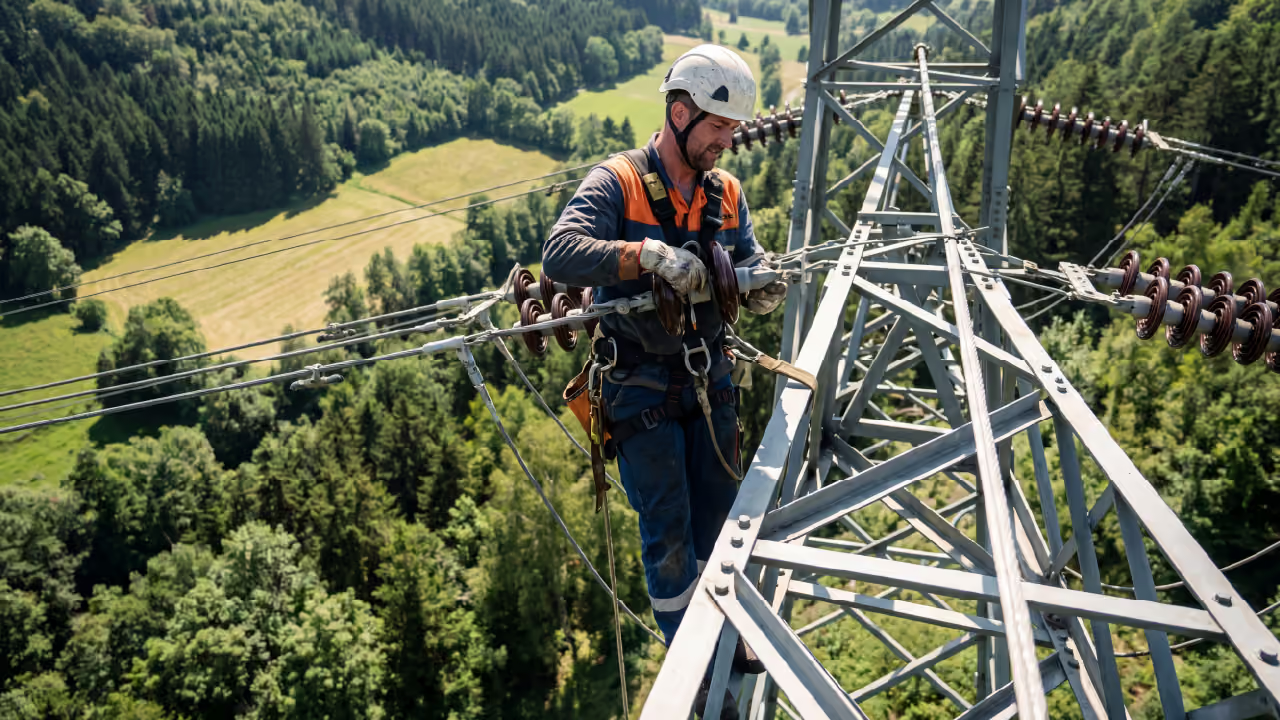
We are involved throughout the entire project lifecycle: design and engineering, program management, construction supervision, commissioning, start-up, and interface coordination. This approach addresses a major industry need: ensuring consistency, meeting deadlines, and maintaining continuity of management within complex technical, regulatory, and multi-stakeholder environments.
This support is demonstrated through our work with RTE. We provide project management support, particularly in PMO, to structure the overall monitoring of operations: building cost, schedule, and risk dashboards, consolidating project data, budget tracking, schedule management, and developing macro-schedules and work phasing to coordinate site interfaces.
On a national scale, these project management and monitoring engineering assignments allow us to support the development and modernization of transmission and distribution networks in response to the growing needs driven by the energy transition.
We also support Enedis with local connection challenges. Our consultants assist in analyzing customer requests, participating in pre-study files, and evaluating potential technical solutions. Carried out in close proximity to end-user needs, this mission aims to streamline and rationalize requests in a context marked by significant pressure on execution timelines.
Our expertise also extends to the end customers of major electricity transmission and distribution companies. Certain industrial projects require cross-functional support, particularly regarding connection, technical coordination, and work planning.
In Auxerre, as part of the construction of the AuxHYGen hydrogen refueling station, we were involved in several areas: geotechnical study, civil engineering, electrical packages, consulting on the station's high-voltage connection, on-site electrical delivery substation tailored to the client's needs, and general work planning.
Connecting, integrating, ensuring reliability
The energy transition relies on an equation that appears simple but is complex to implement: producing more decarbonized energy, transporting it efficiently, integrating it into daily use, and ensuring the long-term reliability of the system.
Electrical grids are at the heart of this equation. By modernizing existing infrastructure, building new capacity, and finding the best connection solutions for industrial clients, major electricity players are making the practical integration of new uses possible.
Working alongside them, we provide technical, project, and field expertise across the entire value chain. This capability allows us to support a sector in the midst of transformation, where grid performance directly determines the success of the energy transition.