Nuclear decommissioning: at the heart of the technical and strategic challenges of engineering studies

As many nuclear facilities reach the end of their operational life, decommissioning has become a major industrial challenge for the coming decades. As a technical, regulatory, and environmental hurdle, it requires rigorous preparation and precise risk management. Decommissioning studies, led by project management (MOE), are crucial for ensuring safety, optimising operations, and controlling costs and timelines.
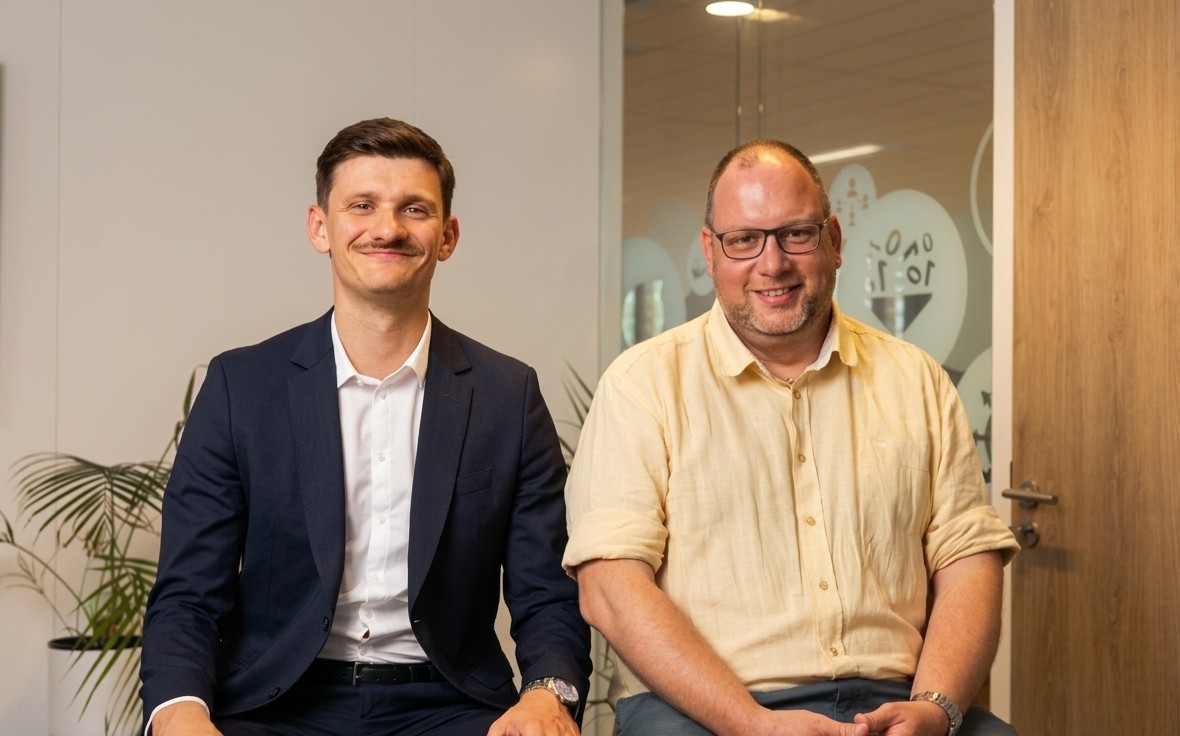
Today, we hear from Gabriel, a nuclear decommissioning engineer, who has worked in both project management (MOE) and project ownership (MOA) roles on the same project, and from Olivier Leclerc, an agency manager at agap2 and sector expert. Two different perspectives, one shared conviction: the study phase is a key driver of success.
Nuclear decommissioning: an engineering challenge above all else
Nuclear decommissioning is a large-scale, often long and complex project with its own unique characteristics. These include managing interventions in radioactive environments, which requires specific operating procedures (working in controlled zones, the use of robotics), the often uncertain state of facilities after several decades of operation, and the management, packaging, and traceability of radioactive waste within a particularly demanding safety framework.
The crux of this challenge lies in the fact that almost all facilities currently being decommissioned were designed and built without their end-of-life being truly anticipated. We are talking about facilities dating back to the 1950s, 60s, and sometimes 70s—a time when the goal was to produce, enrich, or power French civil and military nuclear programmes.
"The facilities were designed and built between the 1960s and 1980s, when the priority was production above all else. The question of decommissioning was not integrated into the design process at the time, as it did not truly become a structured concept in France until several decades later." — Gabriel, nuclear decommissioning engineer.
The result: we are now decommissioning facilities whose characteristics are sometimes poorly understood, with incomplete or obsolete documentation, and without direct feedback from the original designers. This is what Gabriel calls the " loss of memory ", both documentary and human, which lies at the heart of decommissioning projects.
In France, the framework is set by Article L.593 of the Environmental Code. The 2006 law requires operators to set aside funds and demonstrate their capacity to decommission. Since 2025, the ASNR (Nuclear Safety and Radiation Protection Authority), formed by the merger of the ASN and IRSN, has overseen the application of these requirements. However, this framework is evolving, and for projects spanning decades, this can impact technical and economic choices.
Ultimately, decommissioning goes beyond legal obligation: it reflects the industrial maturity of the sector. Its ability to manage the entire lifecycle of facilities determines the trust of citizens and decision-makers, and therefore the prospects for new projects.
Studies as a key success factor: the decisive role of project management
While decommissioning is a highly complex operation, it is upstream, during the study phase, that the project's structural choices are made. This is where scenarios are defined, risks are assessed, and intervention pathways are constructed.
"For me, the role of the study phase is to enable decommissioning to be carried out under the most optimal conditions in terms of risk management, regulatory compliance, technical and economic feasibility, and scheduling." - Gabriel, nuclear decommissioning engineer.
Project management acts as a true technical integrator. It translates these guidelines into concrete measures: site investigations, in-depth risk analyses, the development of detailed scenarios, and the production of the technical deliverables required for decision-making.
The study phase results in the production of key deliverables: the definition of decommissioning scenarios, cost and schedule estimates, risk analyses, and additional investigations to refine the understanding of the facilities.
"Studies are, above all, an exercise in anticipation. Since facilities were not designed to be decommissioned, there is no predefined dismantling method. The entire complexity lies in the ability to structure reliable scenarios based on often numerous hypotheses that must be constantly challenged." - Olivier Leclerc, Agency Manager, nuclear expert.
Olivier illustrates this risk with a particularly telling real-world example: at one facility, during a wall-cutting operation, workers severed the power supply to the fire detection system—a cable that was missing from the plans. The result was a significant safety event that could have been avoided if the upstream studies had identified the cable. This is precisely the type of hazard that the study phase aims to prevent.
Case study: Decommissioning of the Georges Besse 1 plant (Orano Tricastin)
At the Tricastin site, the decommissioning of the Georges Besse 1 plant is one of the most complex industrial projects in the sector.
A few figures illustrate this complexity:
- several hundred thousand tonnes of equipment to be processed,
- thousands of kilometres of piping,
- a multitude of interconnected buildings and facilities.
In this context, Gabriel worked on decommissioning scenario studies, with a key challenge: arbitrating between technical strategies based on radiological and industrial constraints.
His duties included defining scenarios for specific zones, consolidating data (network characterisation, identification of sensitive materials), and conducting cross-functional studies: cost-schedule analyses, sizing of systems, or evaluation of thermal constraints.
Beyond the technical aspects, this project illustrates the reality of decommissioning: it is field-based engineering, founded on constant interaction with operators, experts, and specialist contractors. This link between studies and operations is what determines the robustness of the scenarios and the management of risks.
Integrating uncertainty and risk into the design of decommissioning scenarios
In a decommissioning project, uncertainty is not just one risk among many; it is the permanent working condition. The loss of institutional memory regarding the state of facilities, the lack of reliable plans, and incomplete or erroneous input data are all daily realities that study teams must learn to manage.
"Our main challenge is the loss of memory regarding the facilities. We spend a lot of time doing industrial archaeology, formulating hypotheses, and conducting investigations to make the foundations of the scenario reliable. Because a scenario built on poor data inevitably leads to major discrepancies during the operational phase." - Gabriel, nuclear decommissioning engineer.
Faced with this reality, two approaches are essential: formulating solidly documented hypotheses and launching investigations when uncertainties are too high. These may concern the integrity of civil engineering structures, radiological characterisation, or the layout of poorly documented networks.
Technical constraints further complicate these choices: certain cutting tools are prohibited due to fire risks, while the use of water or specific protective clothing may contravene safety regulations. These examples illustrate the multitude of parameters that must be integrated into intervention strategies.
"It is essential to adapt intervention techniques to all existing constraints from the outset. Whether it concerns ventilation, asbestos, security, or fire risk, the parameters to be integrated are numerous and cover a wide range of fields." - Gabriel, nuclear decommissioning engineer
To ensure the reliability of scenarios in this context, the method relies on several structuring practices: regular design reviews with the client and multidisciplinary experts, as well as strong upfront framing by safety requirements.
The approach does not consist of designing a single scenario to then try and validate it, but rather building several scenarios based on different hypotheses that are compatible with these initial constraints, then comparing them according to technical, economic, safety, or feasibility criteria in order to converge on the best compromise.
Coordination and management of complex projects
A decommissioning project is, by nature, multi-stakeholder. The nuclear operator, as the legal entity responsible, acts as the project owner (MOA) and relies on a project manager (MOE), often a specialist, to steer studies and coordinate the various parties involved. Surrounding this pair are subject matter experts (safety, ventilation, electricity, asbestos, etc.), subcontractors, and partners like agap2 nucléaire, who provide specialised expertise during critical phases.
Coordination is particularly demanding due to the regulatory and safety constraints at every stage. Moving a waste drum, for example, requires verifying the compliance of the new storage location. Every decision is subject to structured feedback from the field to the MOE and then the MOA, as part of a rigorous management process. Teams can also provide support to the MOA, particularly in a supervisory capacity.
This coordination relies on proven tools and routines: weekly meetings, discussions with experts, design reviews, and end-of-intervention reports. Their regularity is essential for long-term projects—sometimes spanning several decades—where teams, technologies, and standards evolve.
Expert insight: a sector-wide challenge, an opportunity for those who prepare
Nuclear decommissioning is on the cusp of significant growth. In France, the 56 reactors currently in operation (excluding EPRs) were built within a twenty-year window. Consequently, their final shutdown will occur concurrently within that same window. This is the "cliff effect".
The result: a considerable volume of work that will need to be absorbed over a relatively short period, even as new reactors are being considered or are under construction.
"The nuclear fleet was built over a very concentrated period. In practical terms, this means that dozens of reactors and facilities will reach the end of their lives almost simultaneously. The sector will have to absorb a "cliff effect" that generates a massive workload, all while continuing to deliver new projects." - Gabriel, nuclear decommissioning engineer.
Some good news regarding this challenge: the series effect. Unlike historical facilities, which were often unique, the reactors in the EDF fleet are based on the same licence and exhibit a high degree of homogeneity. The methodologies from the first decommissioning projects can therefore be capitalised upon and industrialised.
This is where digitalisation and simulation come into their own: digital twins, already tested at the CEA in Marcoule, allow for the modelling of facilities, the anticipation of interventions, the testing of procedures, and the training of teams. Simulation is also used to calculate radiation doses and manage waste flows. As for robotics, which is already in use, its deployment is expected to accelerate.
In a sector where complexity is the norm and there is zero margin for error, the quality of preliminary studies is not optional. It is the foundation upon which everything else rests.
Would you like to know more about our position in the nuclear sector? Discover our dedicated page: https://www.agap2.fr/secteur-nucleaire