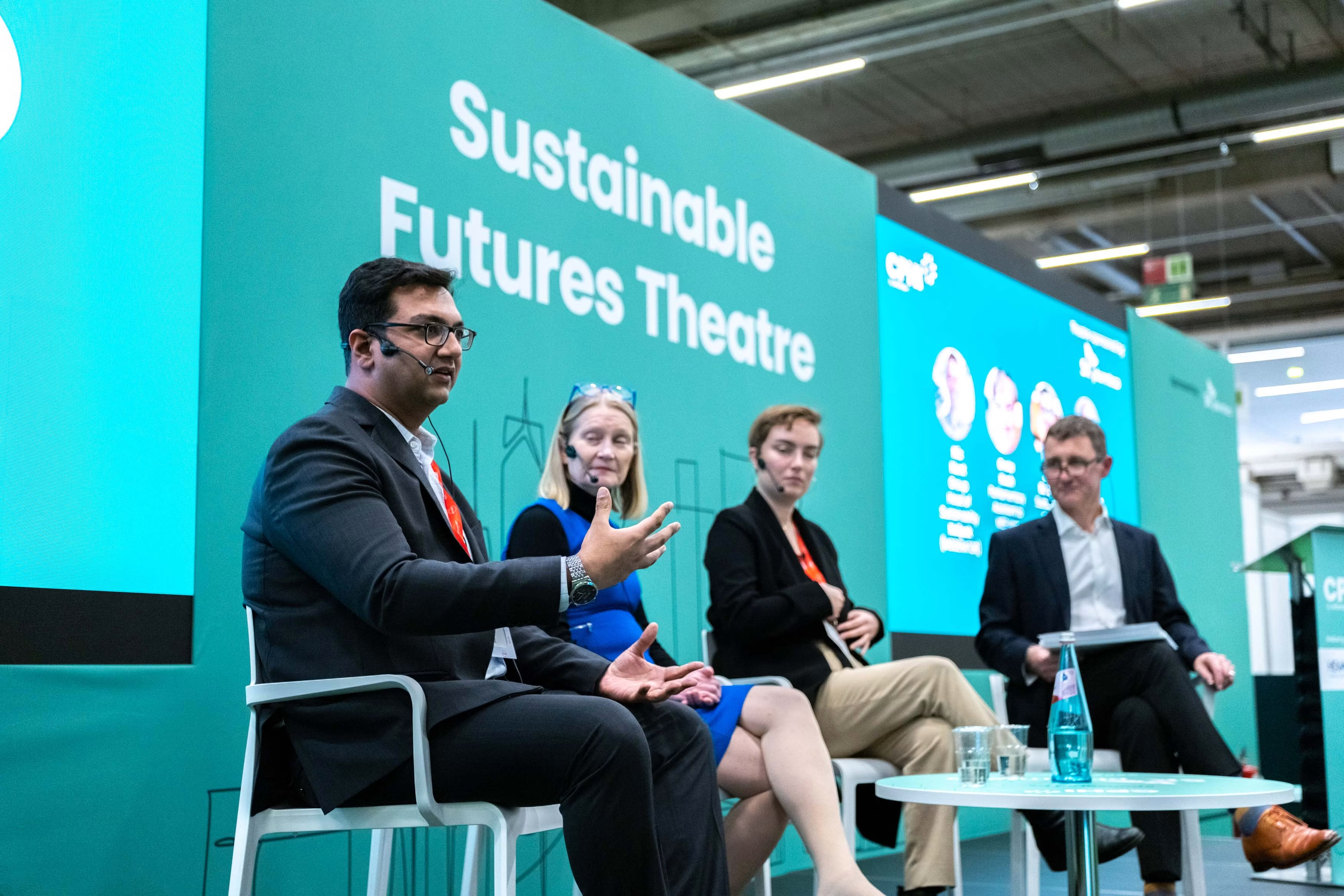
CPHI: agap2 Life Sciences in Milan for the Convention on Pharmaceutical Ingredients

Interview with Aline Goby, Key Activity Manager, agap2 Life Sciences
"Life Sciences manufacturers are no longer just looking for skills. They are looking for partners capable of securing their investments, accelerating their projects and anticipating the next transformations in their industry."
In a sector where manufacturers must innovate faster, secure their operations and meet increasingly stringent regulatory requirements, the CPHI (Convention on Pharmaceutical Ingredients) has established itself as a strategic event for the Life Sciences ecosystem.
Pharmaceutical laboratories, biotechs, medical device players, CDMOs, active ingredient suppliers, equipment manufacturers and technology partners meet there to identify major market trends, create synergies and build the collaborations of tomorrow.
For agap2 Life Sciences, participating in CPHI is about much more than just attending an international trade fair. It is an opportunity to be as close as possible to manufacturers, to understand their priorities and to anticipate the needs that will shape the projects of tomorrow.
To decode these challenges, we spoke with Aline Goby, Key Activity Manager at agap2 Life Sciences, who supports business development with manufacturers in the sector.
Why is this trade fair strategic for agap2 Life Sciences?
Our ambition is clear: to become a recognised European player in Life Sciences.
Today, industrial projects are increasingly structured on an international scale. Framework agreements are becoming global, needs are spread across several countries and clients are looking for partners capable of supporting them beyond a local scope.
This is a real strength for agap2. We are present in several European countries and are strongly developing our Life Sciences activities. This presence allows us to create synergies between our teams, mobilise the right skills according to needs and provide responses adapted to the operational realities of each market.
CPHI therefore allows us to convey this message: we have the capacity to support complex, multi-country projects with an approach that is local, operational and European all at once.
What do manufacturers expect from a partner like agap2 today?
Their priority remains the same: delivering projects on time, controlling costs, ensuring regulatory compliance, and guaranteeing product quality.
In the Life Sciences sector, compliance is paramount. Pharmaceutical and healthcare environments are highly regulated, involving audits, quality standards, validations, documentation requirements, and regulatory constraints. Manufacturers therefore need a partner capable of understanding these constraints and working on complex issues while remaining compliant with industry standards.
On a very operational level, they are also looking for responsiveness, availability, and flexibility. Above all, they expect experts who are immediately operational and capable of integrating into demanding GMP environments without an endless onboarding period.
Our role is to understand the technical, regulatory, and human constraints before they even become a barrier to the project.
What are the major challenges currently transforming the Life Sciences sector?
I see three major developments among our clients.
The first is the acceleration of investment in biotherapies and aseptic production capacity. Major laboratories are investing heavily to support the scaling up of biomedicines.
The second is data utilisation. Artificial intelligence is no longer a prospective topic; it is beginning to tangibly transform GMP documentation, quality data analysis, and process optimisation.
Finally, the third concerns the management of industrial risks. Between Annex 1, Data Integrity requirements, and the expectations of health authorities, manufacturers are primarily seeking to secure their operations.
It is precisely on these issues that a partner like agap2 can add value.
How does agap2 Life Sciences support its clients in the face of these transformations?
Our expertise covers the entire life cycle of health products: research and development, industrialisation, production, quality, validation, regulatory affairs, continuous improvement, digitalisation, and industrial transformation.
But our value does not rely solely on the expertise we already possess. It also relies on our ability to identify emerging needs, seek out the necessary skills, and train and retain talent.
This is particularly true for subjects such as bioproduction, data, the cloud, and artificial intelligence. Needs evolve quickly, and our role is to adapt to support our clients with the expertise that is becoming strategic for their projects.
In a context of a war for talent, manufacturers need qualified, available, and quickly operational skills. This is an essential lever for securing their projects and accelerating their transformations.
Our clients no longer think only in terms of a single site or country. They now manage European, and sometimes global, industrial programmes. The partners they choose must be able to speak the same language in Lyon, Milan, Basel, or Frankfurt. This is precisely the direction agap2 is taking.
You speak of moving from a supplier relationship to a partnership. What does that change in practical terms?
Being a supplier means responding to a need that has already been defined. Being a partner means being able to intervene earlier, helping to structure the need, challenging the project, identifying the right levers, and proposing an appropriate solution.
Manufacturers can sometimes see using a consultancy firm as an extra step: you have to formalise specifications, take time, and define the need. But that is precisely where we can help them.
Even when an idea isn't fully formed, a discussion can save time, clarify priorities and help identify the necessary skills.
This is how we want to work with our clients: not just responding to a one-off need, but through a process of co-creation.
What message would you like to send to the companies attending CPHI?
CPHI is a fantastic catalyst for networking.
Whether you are in the planning phase, launching an industrial investment or looking for specific expertise, let's use this event to connect. The best projects often start with a simple conversation.
Will you be at CPHI? Come and speak with the agap2 Life Sciences teams to discuss your industrial projects, transformation challenges and skills requirements.