Pharmaceutical reindustrialisation: how Europe is (re)taking control - Pascal Villemagne, CEO of Seqens

From awareness to action
The COVID-19 pandemic highlighted Europe’s heavy dependence on third countries for supplies of essential medicines. Over 80% of the active pharmaceutical ingredients (APIs) in paracetamol today come from Asia, and 99% of antibiotics are produced in China.
This situation undermines both the continent’s health sovereignty and Europe’s ability to preserve its industrial know-how and safeguard its value chains.
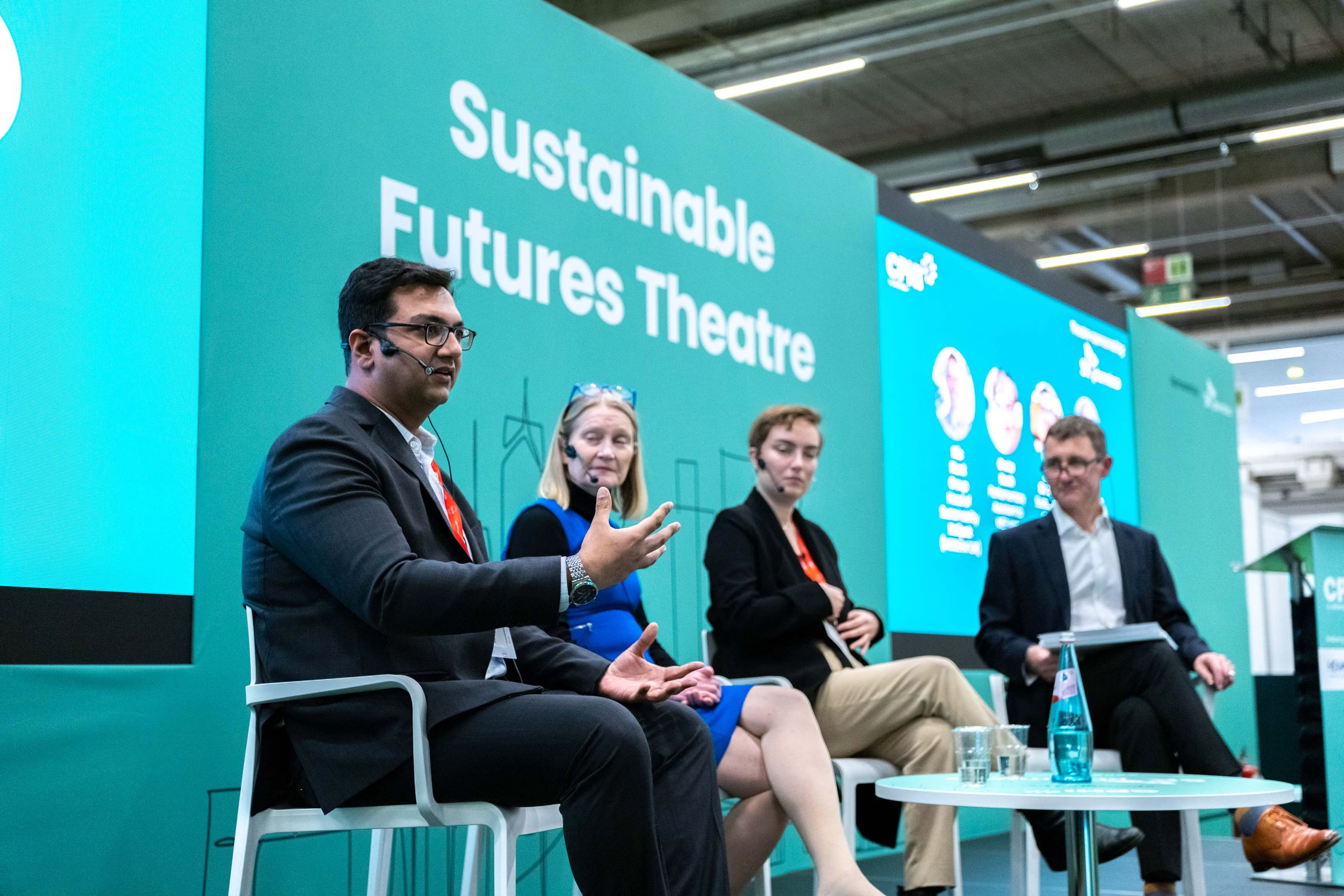
Pascal Villemagne, Chairman and CEO of Seqens, recently spoke to our teams in Lyon to share his vision and the concrete action taken by his group to strengthen European autonomy and the competitiveness of the pharmaceutical sector.
Here’s a look back at the main points raised during his speech.
Regaining health sovereignty through reindustrialisation: the case of paracetamo
“Relocating our entire industry to Asia poses major risks to our sovereignty, particularly in terms of health security and sustainable access to essential medicines”, says Pascal Villemagne.
Paracetamol is a perfect illustration of this issue. After suspending production in 2008 for competitive reasons, Seqens launched a major industrial project at its Roussillon site (Isère) in 2020 to rebuild a local production chain.
The aim is to guarantee French autonomy and meet the needs of the European market.
However, with an investment of almost €100m, the new plant at Roussillon will be fully digitised and highly automated. According to Seqens, it will offer ”twice as much capacity, with five times fewer people than in 2008”. In addition to relocation, reindustrialisation requires a global approach aimed at:
- Strengthening research and development to maintain intellectual property in Europe
- Better anticipating market needs by monitoring volumes and consumption
- Reducing the carbon footprint of production.
“Paracetamol from the Roussillon site will havefive times less carbon impact than that produced in India” explains the CEO of Seqens.
Europe: the great task of reindustrialisation, between ambition and challenges
Industrial partners, essential links in the reindustrialisation process
In his speech, Pascal Villemagne stressed a key point: ”A successful project is above all one that is well managed. Time and flexibility have become essential. We’re looking for partners who can quickly mobilise the right skills and support us in automating and digitalising our processes.”
At agap2 Life Sciences, we share this conviction. Our added value is based on our ability to:
- provide engineering and commissioning expertise,
- strengthen project management while guaranteeing regulatory quality,
- mobilise specialist skills in the automation and digitalisation of pharmaceutical processes,
- guarantee operational flexibility, by rapidly deploying the necessary experts during peaks in activity.
This approach is reflected in the projects we are carrying out alongside Seqens, including:
- supervising and managing API laboratory activities, including quality control on raw materials and finished products,
- the replacement of an obsolete refrigeration system at the Limay site, a critical project to safeguard production and optimise energy performance,
- support for ANSM requirements, with deviation management and the implementation of CAPA (Corrective and Preventive Actions) to ensure regulatory compliance.
These achievements illustrate our role as a {1>trusted partner<1}, supporting life sciences companies in both their day-to-day challenges and their long-term strategic transformations.
Towards a sovereign and innovative pharmaceutical Europe
The reindustrialisation of APIs in Europe is at the crossroads of three issues: public health, industrial competitiveness and environmental transition.
The Seqens project illustrates that it is possible to combine these three dimensions, provided you invest heavily in technology and R&D and rely on partners capable of executing quickly and efficiently.
As Pascal Villemagne sums up:
”If Europe wants to remain competitive and sovereign, it must focus on automation, innovation and stronger R&D.”
At agap2 Life Sciences, we are convinced that this transformation is a strategic opportunity for Europe, and we are working with our customers to make it a reality.